
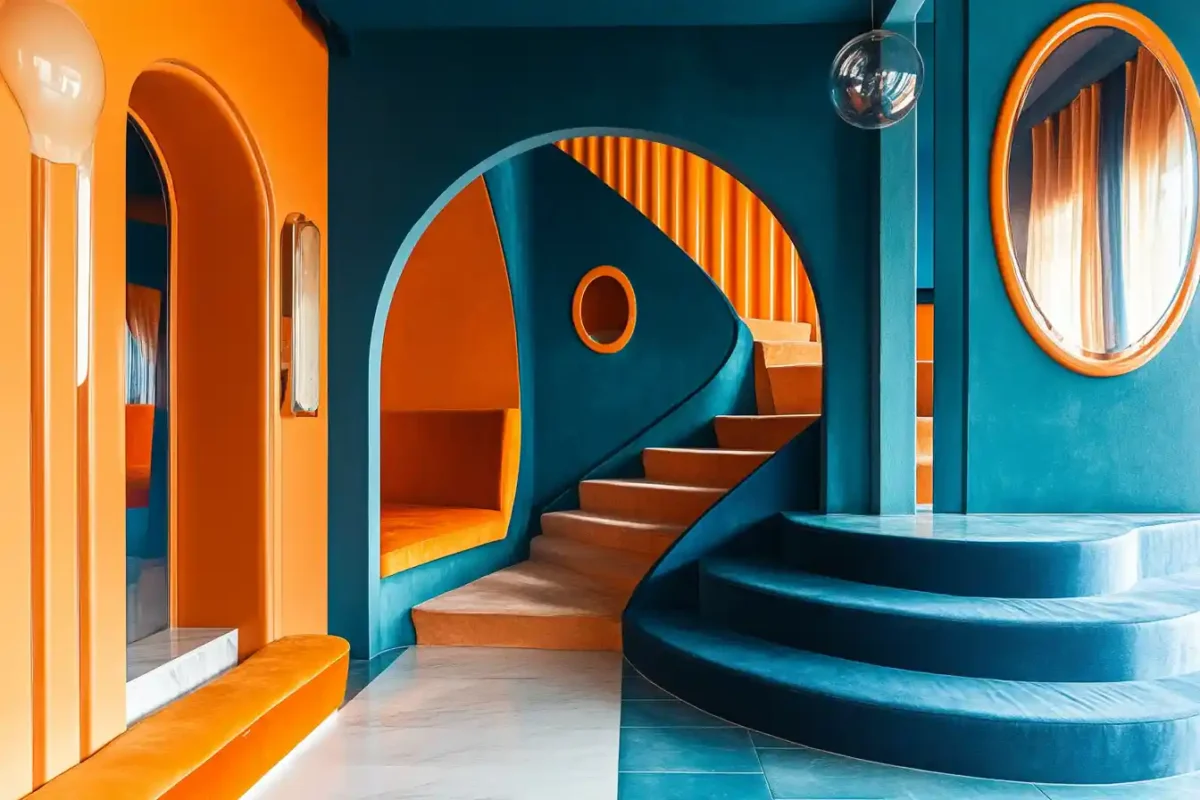
Interior design is an art form that combines science to enhance the aesthetics and accessibility of any interior space within a building. It improves the productivity of the space and makes every corner equally accessible, and it has a great impact on someone’s mental health. Interior design requires deep research on various factors, such as space planning. This is a crucial and primary component since decoration needs space and planning. Following that, choosing the right material is crucial because it is the most significant factor in ensuring the project’s quality and lifespan. The materials used for decoration, such as metals, fabrics, stones, and woods, must all be of high quality. Moreover, ensuring the functionality of every corner of the space while making it look aesthetic is one of the primary duties of an interior designer.
Nowadays, the demand for interior designers is at the top, as investing in interior design is worthwhile, as it can lead to a higher sale price or rental income. A decorative and aesthetic look creates a desired ambience and boosts productivity. Furthermore, in this day and age, people are eager to engage in activities that either reflect their personality or allow them to customise their environment according to their preferences. Interior design provides them with the opportunity to accomplish both of these things, while also allowing them to maximise the use of the space if it is limited. In this context, there are so many institutes that provide a comprehensive guide to an interior design course in kolkata. NIF Global Saltlake offers various courses in interior design, such as B.VOC, B.DES, M.VOC, and a 2-year advanced certification in interior design. This can be considered the best interior design college in Kolkata.
At this point, the disagreement started when artificial intelligence was brought up in the discourse. People started raising questions such as what would happen if AI were to replace interior designers or if AI could perform tasks digitally without the assistance of humans. As an outcome, we are going to go into this topic during this article and investigate the facts around it while we search for the answer.
The role of AI in interior design
Faster design process:
AI, which is supported by advanced technology, expedites the design and decoration process while enabling designers to experiment with more unique design concepts. People in this generation want everything done quickly, and artificial intelligence (AI) is ideal for this since it makes sure that no work is done slowly or with significant errors. It benefits the designer as much as the client.
Automation task:
AI is among the greatest at automating activities since it can design colour palettes, advise furniture placement, and produce room layouts, all of which help clients see the space before the project is completed. To accommodate the client’s preferences, it helps to prevent inefficiencies or errors in the task.
Data-driven insights:
By examining floor designs and making recommendations for the best furniture arrangements, AI systems streamline this process. These technologies produce designs that are both aesthetically beautiful and incredibly functional by taking into account elements like traffic flow, space proportions, and even ergonomic considerations.
Enhance communication and collaboration:
Chatbots and virtual assistants driven by AI may manage standard client inquiries, set up meetings, and deliver real-time updates, all of which increase the effectiveness of communication. Systems that use natural language processing (NLP) can provide automatic responses, summarise conversations, and transcribe sessions, increasing communication effectiveness and clarity.
Will AI ever be able to replace interior designers?
While AI is becoming progressively skilled to help with interior design—from suggesting layouts, to colour choices, to generating 3D visuals—it will likely never take the place of an interior designer. The creativity, emotional intelligence, and “what it means to design a space” will likely continue to elude a robotic version of a designer. Interior design is more than aesthetics; it requires an understanding of the clients’ lifestyle, personal style, spatial requirements and any cultural aspects that they may bring into the design of their space. AI can support the design process by providing data-driven recommendations and automating and expediting parts of the process, but it will never substitute for the human touch that includes empathy, instincts, and the ability to manage complex and process-oriented projects. Therefore, AI has a better probability of being a powerful tool to augment and enhance the work of interior designers, rather than replace them.
To wrap up, AI has advanced remarkably in helping design through sophisticated visualisation tools, space planning algorithms, and virtual simulations; however, AI will never fully replace interior designers. Interior design goes beyond functionality or aesthetics, meaning, it is about trying to connect through human experience as well as addressing the human experience while considering emotions, lifestyles, and cultural influences, which AI, at this time, does not have the same sensitivity or creativity to replicate. Designers add personality, compassion, and narrative that transcend data-generated solutions. AI is not meant to replace designers, but rather to continue to strengthen the design process and add capacity in exploring new ways to innovate the design world.